Showing posts with label Cliff Notes 2015. Show all posts

8.31.2015

Cliff Notes for the 2015 Twins: Chapter 4

The first days of school are right around the corner for many tykes in Twins Territory, so to help you with that summer reading you neglected, here's some more notes about that local best-seller: The Minnesota Twins

Chapter 4: Post-All-Star Break to End of August
Plot Summary:
While the doldrums in Chapter 3 appeared foreboding, the climactic triumph of Glen Perkins and Brian Dozier's march to the All-Star Game (and accompanying 6-1 stretch) offered a great deal of hope to Twins fans. As I wrote then 
"As Perkins and Dozier rise as protagonists, it will be interesting to see what obstacles and conflicts are thrown in their way to create dramatic tension for the rest of the season."
In many ways, those obstacles and conflicts are part of Chapter 4's great unraveling....

OOH BOY!
It's worth 5 cents!
On a Summer Vacation style trip to Oakland and Los Angeles, Glen Perkins' save streak came to an abrupt end.  Home series against the Yankees and Mariners didn't help matters and a swift sweep at the hands of the Blue Jays at the start of August left many people questioning whether or not the whole season was doomed.

It didn't help that the Twins' attempts to bolster their squad were...underwhelming, as very few kids clutch their "Kevin Jepsen" or "Neal Cotts" trading cards. Sure enough many people targeted the bullpen as a disappointment, and the starters didn't help matters by following the struggles in Toronto by spending a weekend in Cleveland where no starter got through 4 innings. 

Meanwhile, in the line-up, Dozier's daunting numbers have slipped, dropping forty points in On-Base Percentage, and one-hundred points in Slugging Percentage, right when (as the pitching shows) his bat would be quite valuable. An eleven run outburst against the Rangers helped them in the Wild Card, but by the time the Twins hit New York for another series agains the Yankees the rival Royals' division lead had stretched to 12 games. After (yet another) sweep in the Bronx, that lead was 14, and even the wild card seemed out of reach. Particularly when the two All-Stars were so far from the heroes they seemed to be just months before.

Or so it would have been, if another hero had not emerged over Chapter 4. Twins' fans hearts have begun to pitter-pat in a way they haven't since the days of "Baby Jesus", fittingly thanks to an Angel...or rather, an Ángel. Miguel Ángel Sanó. The burgeoning power and satisfying patience offset a strike-out happy debut, and once joined with his fellow rookie sensation Byron Buxton, Sano helped carry the Twins to a staggering 8-2 run to close out the month, with all the wins coming against fellow playoff contenders in Baltimore, Tampa Bay and Houston.
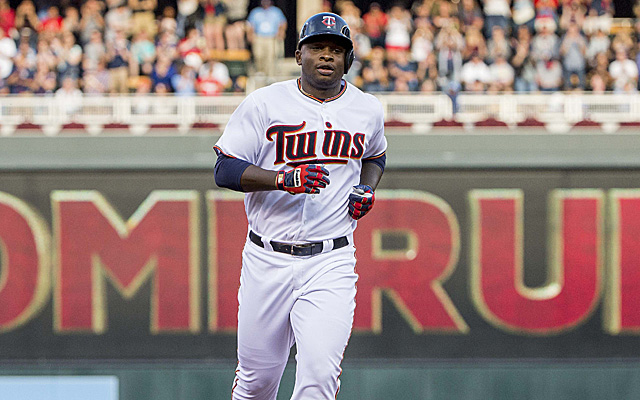
Do it again Miguel!
So despite the doom and gloom that pervades chapter four, again the authors' of the Twins season offer reasons to hope entering the next thrilling chapter.

Main Character Development:
We've mentioned the falls of both Perkins and Dozier and the plot summary referenced the rise of Sanó, but baseball seasons' don't just develop the obvious protagonists, they develop everyone.

Consider Eduardo Escobar: this was a player who seemed for all the world to be an tossed-in trading chip on an insignificant deal during the middle of a lost year. A player so insignificant, that our review of the trade focused more on a poem about the departing Francisco Liriano than any reflection on who was coming over. Three years later, while the man he was traded for has been solid on the mound, Escobar has become something of a cult figure in Twins Territory, occupying a space once reserved for Nick Punto or Gene Larkin. He has out-hit Pedro Florimon, out-fielded Danny Santana, and out-everythinged potential trade bait to become the starting short stop on a play-off contender. That's a heck of a return for three months of poor performing Francisco Liriano.

Pictured: The Bachelor in Paradise
equivalent of Terry Ryan holding
Ervin Santana.
If you want a less optimistic development consider Ervin Santana: At the end of Chapter 3, Santana twirled a fine game against the division leading Royals, with eight strikeouts in eight innings, leaving the K deprived Twins fans eager to #SmellBaseball (and in many cases, learn what hashtags really meant). He seemed to be a bright spot on the dispiriting West Coast road trip and then spent a six game stretch allowing an average of 5 runs per start and winning exactly zero of those games. High hopes were dashed, and the cheers turned to questions about whether we had been bamboozled by steroid inflated numbers, just like Joe was hoodwinked by Samantha's 200 texts on Bachelor in Paradise (don't pretend you don't know what I'm talking about). Perhaps his 10 Strikeout performance will redeem him...or perhaps he's a pineapple.

Key Quote/Stat Explained
+tOPS in High Leverage At Bats

+tOPS is a way to tell if a player is performing better or worse than they normally do. 100 is average, so any thing above that is good for a hitter (and bad for a pitcher), anything below 100 is bad for a hitter (and, obviously, good for a pitcher).

Leverage is a means of measuring how any individual at bat can affect the outcome of the game. If a pitcher can get an out in a high leverage situation (like, say, the bases loaded with no outs and a one run lead) that's a little more important than a low leverage situation (like, say, facing the number nine-hitter with two out, nobody on, and a ten-run lead).

When the going gets tough...
Right at the end of Chapter 3 the Twins turned Trevor May into a relief pitcher, and while it hasn't been as narratively satisfying as some other characters' arcs, it is instructive in this situation. After all, May has pitched a lot this season, in all kinds of situations as both a starter and a reliever. In low leverage situations, he's performed like he usually does (tOPS = 104). In medium (or average) leverage situations he's performed like he usually does (tOPS = 108). In high leverage situations he has been significantly better (tOPS = 74).

Those numbers are all still about average by league standards, but it suggests that Trevor May can be quite good right when the Twins need him to be (no matter which role he's pitching in).

Literary Terms to Impress English Majors:

If the 2015 Twins are a mystery to you, as they are to most fans, then you're ready to find out exactly what this year has been a Red Herring and what isn't. 

The 2015 Twins plot points
Many hard core mystery fans know to expect red herrings, or misleading clues in the course of their story, say when a suspect is called "a bad, bad man" by a trustworthy source right when the detectives are looking for a "bad, bad man". Naive readers may assume, the "bad, bad man" is the villain, trained readers know that there's something else a foot.

So the best writers (or those who like messing with readers the most) enjoy piling red herring on top of red herring until you have a veritable smorgasbord of deceptive head fakes, winks, nods and suggestions leaving everyone totally bewildered. So, if you're trying to figure out your team's identity and you're perpetually bombarded by mediocrity, then brilliance, then ineptitude, you know you've got a Red Herring, you just don't know which one. The same goes for players: is Glen Perkins the shut down closer of your dreams, or an injured work horse? Is Brian Dozier an MVP candidate, or a great head of hair and a winning smile? Is Ervin Santana a disaster or a diamond? Is Neal Cotts another Bargain Bin retread, or just what the doctor ordered?

The climactic chapter of the Twins' season is yet to come, all will be revealed, and all the herrings will be eaten.

7.17.2015

Cliff Notes for the 2015 Twins: Chapter 3

Again, I've been derelict in my duty--though I was out of the country and away from reliable internets for a while there. Still were back with another nerdy English-Class style recap of the last month (plus) in Twins Territory


Chapter 3: June to the All-Star Break
Plot Summary:
So great was the joy among fans after a shockingly strong June, that the Twins could, to many eyes, have appeared better than they actually were. So it was only slightly surprising that the team stumbled badly in June.


The slide began by dropping two out of three to the Brewers (who had not been terribly impressive) at Target Field. Then the rival Royals ended the Twins' time atop the Central with a sweep (culminating in Torii Hunter's freak out) and the doldrums continued as they dropped two out of three to the Rangers, but in an effort either to stop the slide or to hold on to their quavering place in the attention of local fans the Twins called up the first of their dynamic prospects: Byron Buxton.

Buxton's arrival accompanied the only Twins win in Texas, and despite two losses in St. Louis, his thrilling play and daring speed were on fine display as the team returned to the Twin Cities in excellent form evening the score against the Cardinals, several close games against the Cubs and a crushing of the White Sox. Sadly, a slide against the White Sox also crushed a bone in Buxton's thumb, and he was removed from the lineup as suddenly as he appeared.

Efforts to repeat the magic on a return trip to Milwaukee by calling up another touted prospect in Alex Meyer were unsuccessful. The National League again thwarted the Twins' momentum as the Brewers and Reds squeezed the home town 9 to a paltry 4-8 record against the bottom 3 teams in the NL Central. Meyer was duly demoted and again things looked grim.

The Twins went to the prospect well a third time and called up Miguel Sano for their visit to Kansas City. As a pure hitter, Sano trumped even the heralded Buxton, and his 11 game hit-streak coincided with the Twins sudden offensive rejuvenation as they finished the first half of the season on a 8-3 run, good enough to put them in 2nd place in the division and 2nd place in the entire American League.

Main Character Development:
The true climax of this chapter was the All-Star Game and the two Twins players who went, recognized as being among the best of the best (the 90th percentile of players in the major leagues). First and foremost, the acknowledged top closer in the league: Glen Perkins. Perkins broader acclaim was all the more note worthy for where he had come from: failed starter, unhappy demoted pitcher, after thought set-up reliever, and, as of now, owner of the best Save streak in Twins history (28 in a row). Most impressively, in this chapter of the season he faced 45 batters and allowed only 6 of them to reach base (a .133 OBP against).

Perkins was joined in Cincinatti by second baseman Brian Dozier who was initially left off of the roster. That snub may have been the best thing for him. It begat a voting campaign (No Bull, Vote Dozier); it got his name mentioned consistently in the national press and on cable tv, and it aligned perfectly with an outburst of timely hitting including two walk-off home runs and another in the All-Star Game itself that captured a great many eyeballs across the country and began a genuine grumbling campaign that he might be the league MVP (assuming he both kept it up and found some way of getting Mike Trout to fall into a temporal vortex). What was once a cute photoshop on this blog is now a common talking point (so much so that at a wedding I attended last weekend, both the bride and my grandmother could be found discussing him).

As Perkins and Dozier rise as protagonists, it will be interesting to see what obstacles and conflicts are thrown in their way to create dramatic tension for the rest of the season.

Key Quote/Stat Explained:
Pythagorean Winning Percentage: .528

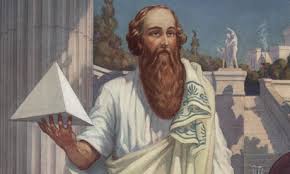
As any fan can tell you, occasionally the better team loses. Unlucky bounces, dumb umpire calls, a slight stumble on a soggy infield, all of it can turn the game when you least expect it. So there's the Pythagorean Winning percentage, in which the square of the hypotenuse of a right tri...wait, no...that's Pythagorus' Triangle Theorem...when he was brought forward to the present by Doctors Bill S. Prescott and Theodore Logan to watch baseball and party on dude, he (and Bill James) developed an equation to measure how many games a team should win based on both their runs scored and their runs allowed.

To wit:
                      (Runs Scored)^1.83
---------------------------------------------------------
(Runs Scored)^1.83 + (Runs Allowed)^1.83
via baseball Reference

Basically dividing the (approximate) square of a team's runs scored, by the (approximate) square of their runs scored PLUS the (approximate) square of their runs allowed should yield an average result.

So while many Twins fans are dancing joyously at the fact that the Twins have the second best record in the American League, our Pythagorean Winning Percentage can show whether we are really lucky, a little lucky, or even unlucky to be where we are.

The Twins Pythagorean Winning Percentage is .528 (or 52.8%); their real world winning percentage is .551 (or 55.1%), so they've only been about 2.3% luckier than their run total would suggest. So they are actually a solid team with the chance to get better (unlike the White Sox who are below 500 and still 8% luckier than they ought to be).

The one down side is the Twins have a lower Pythagorean Winning Percentage than 8 other teams, including three currently outside of the playoff hunt: the Orioles (7% unlucky), the Blue Jays (8% unlucky) and the Athletics (9.8% unlucky). If those teams see their records normalize a bit, and the Twins drop even a percent in their luck, people dreaming of the playoffs can put a pin in it.

Literary Term to Impress English Majors:
Writers throughout history have relied on a simple belief: everything's better in threes. Hence "The Rule of Three". Things are funnier, easier to remember, generally more meaningful if you combine things in threes: three volume novels; three act plays; three little pigs; three bears; I came, I saw, I conquered; stop, drop, and roll; a priest, a minister, and a rabbi

It doesn't just take three things to fit the rule of three, they should be thematically connected and structured in such a way as to make meaning. So take the Twins June/July call ups: Buxton/Meyer/Sano.
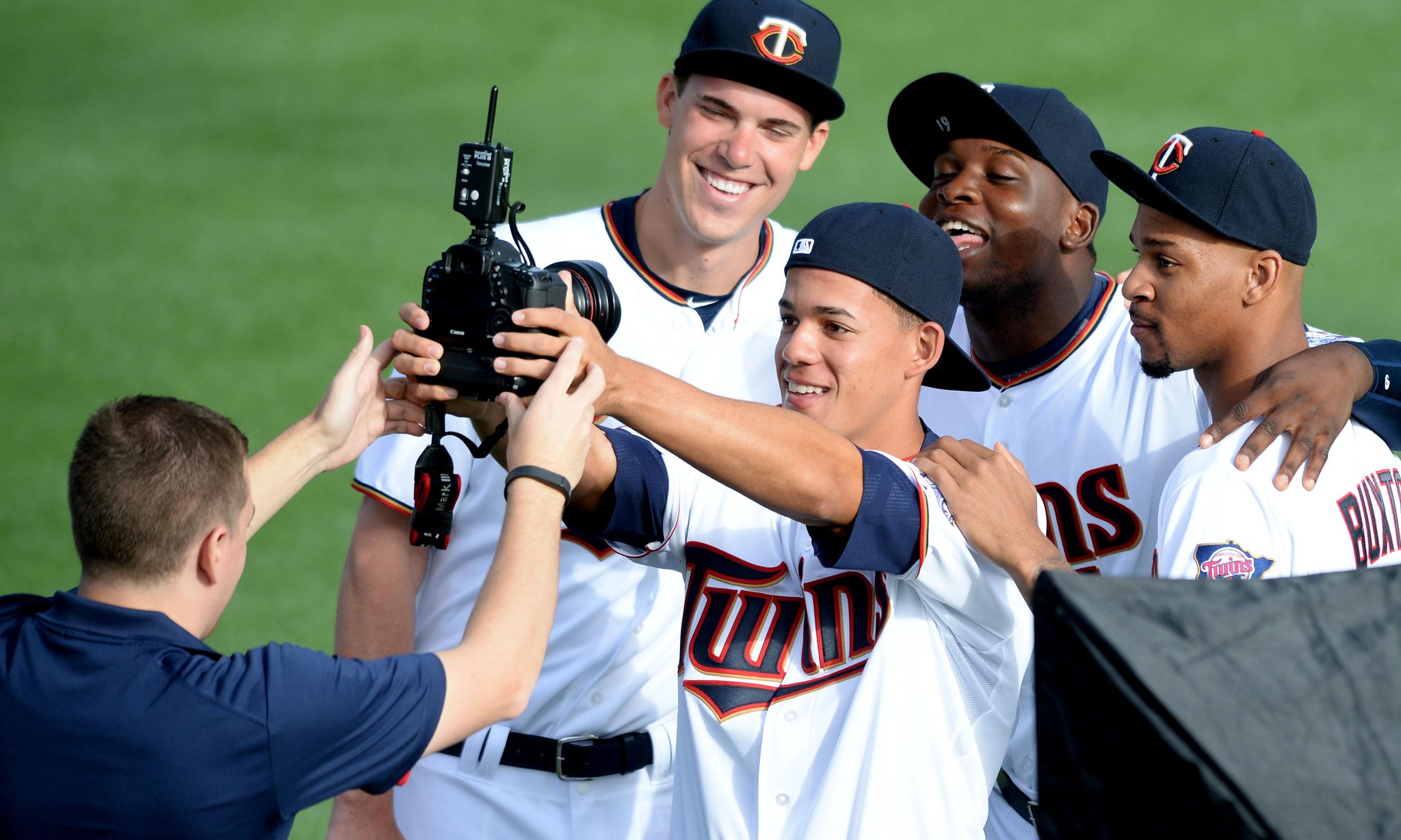
From L-R: Meyer, Berrios, Sano, Buxton
(Good news, Jose: you don't have to worry about this rule)

  1. Buxton comes first, and excites the fan base, we need him and he looks pretty good but it's over early due to the thumb injury. 
  2. Meyer comes second, the fan base is a little less excited, but there's enough mention of his pedigree, status and dominance as a reliever in AAA to make him enticing, and it's over very quickly when he gets hammered by big league bats. 
  3. Sano comes last, and while he's long been one of the two big names in the Twins' system, the structure is set up to make at least a few fans regard another call-up skeptically. So his offensive outburst with power and patience seems like a pleasant surprise, even though he has always looked capable of this.
Obviously, I don't think the Twins intended Buxton and Meyer to have such unpleasant endings to their Major League debuts, but if there was some sort of magical script-writing in all of this, it would be a pretty great use of the Rule of Three.

6.09.2015

Cliff Notes for the 2015 Twins: Chapter 2 "May"

Like my very own students, I'm slow in posting, but by god, I will always deliver these cliff notes...unless I go crazy grading student papers first.

Chapter 2: "May"
Plot Summary:
Just as Twins fans prepared themselves to see the silver lining at the end of April reform into a thunderhead of injuries, incompetence and ineffectiveness, something happened that had not happened for a long time in Minnesota.

The silver lining got brighter.

And brighter.

And brighter.

So bright in fact, that it was hard to see the clouds any more. They opened the month with four straight wins, and after one loss...four more straight wins. They took a series from Oakland, and Cleveland, but surely the Eastern Division would be our downfall...nope: two of three from Tampa, three straight from Boston, and two of three from Toronto.

A chatter filled the air: delight, surprise, disbelief. Are they for real? Fans asked on the rooftops of local bars and restaurants. Can they keep this up? Supporters questioned over cubicle walls and in carpools. How the hell are they doing this? Minnesotans pretended not to wonder, even as cable pundits bellowed it louder than any member of "Twins Territory" ever could.

There was effective hitting to be sure, and consistently strong relief pitching, even simple competence from the starting pitchers was so deeply appreciated it might have been treated like the second coming of Walter Johnson himself. But above all else, there was confidence. There was consistency. And there were wins.

Sure, it might not last, but it was warm, it was joyous, and the silver lining was so bright, you had to wear shades.

Main Character Development:
Would that we could say that it was all about Trevor May in the month of May, but it wasn't.

First, there was the human exclamation mark: Ricky Nolasco! Without Nolasco in the rotation, things seemed to be fine in April, and few if any were gung ho about his return. He has earned as little trust from Twins fans as Scott Boras. And yet, without making much fuss (or exploding in his characteristic exclamatory twitter jamboree) Ricky racked up 26 strike outs in his 6 outings. Did he average more than 5 innings in those appearances...No. But 26 strikeouts! And only 6 walks! He bested Phil Hughes!! He made me love the exclamation mark again!!! UNIRONICALLY!!!

Then there was another, oft debated, warily embraced Twin who returned this year, albeit from other cities rather than the disabled list: Torii Hunter. And while April gave us plenty of stories about Torii the "character" (the leader, the mentor, the clubhouse general, etc.) his actual play in the field was fine but often forgotten. Then he became less of the wise old sage, and more of the totally dangerous Jedi-Master: Torii-Wan-Kenobi. The kind of man who can duel a foe and come out stronger. Can he defend fully? Probably not. But as long as that swing still sings, all manner of things can be forgiven.

Key Quote/Stat Explained:
2 Outs/RISP & BAbip
You'll often hear people say that there's no such thing as "clutch." You can't measure talent under pressure because players are still players, some times they hit, sometimes they don't, some times it rains.

But, as with everything else people say doesn't exist (Sasquatch, the Loch Ness Monster, a Josh Duhamel movie that doesn't stink), once you say it, people are determined to prove you wrong. Hence: the "Clutch" Sections on baseball-reference.

This is where Baseball-Reference stat-heads compile the splits to cover how players and teams perform in key situations that we often refer to as "clutch", situations like: 2 outs and runners in scoring position, and when we see that BAbip (or Batting Average on Balls in Play, aka how often the Twins hit the ball rather than striking out or walking) we see a surprising .320 from the team.

That would be a clutch number. It would mean that when the Twins have a chance to score a run with a hit in a critical situation, they're doing it about a third of time they put the ball in play. That's mighty good.

But it's also a pretty terrible strategy to say "let's get guys in scoring position, and then get two outs because we do really well in those situations!" and BAbip is subject to lots of variables, not just hitters' strengths (i.e. opponents' fielding, pitcher fatigue, etc.).

So why bring it up? Well, like quotes in literature, this can be read two ways. If you have a friend who says "the Twins keep getting hits when it matters", you have to admit they are right. If your friend assumes that means the Twins are going to win the World Series...well...probably not.

Literary Term to Impress English Majors:
Perhaps you've noticed, but while there's a lot of sunshine and silver linings and players defying expectations and "clutch hitting", I'm not entirely on board. Nor for that matter are national writers, local writers, local bloggers, and pretty much anyone who isn't immediate family to the Twins staff themselves.

I want it to be true, oh-sweet-lord-have-mercy! I want it to be true! I want Ricky Nolasco to keep the pitching going and get his arm stronger. I want Torii Hunter to keep hitting and finding his fielding form of old. I want "Clutch" to be real, and for the Twins to bottle it, and sell it to fans for a reasonable price so I can come up big when it matters most in my job. But I have enough experience with literature to know that it's not always that simple.

That's where the unreliable narrator comes in.


An unreliable narrator is someone whose story telling, just doesn't add up. There are contradictions within the action, there are obvious omissions, there are attempts to gloss over somethings that matter and over emphasize things that don't.

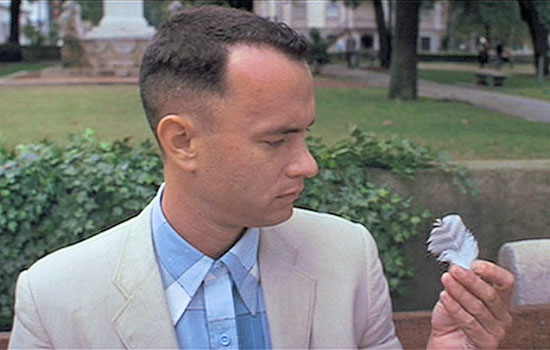
There's not necessarily anything malicious in an unreliable narrator. They can be solely interested in undermining the system, or making you laugh, or challenging your preconceptions. They can be tremendously entertaining and enjoyable: Forrest Gump was an unreliable narrator, so was Ted Mosby from "How I Met Your Mother".

If the Twins are telling the story of 2015 to their fans, they may be unreliable narrators. But after a tremendous May,

I'm happy to keep listening.

5.05.2015

Cliff Notes to the 2015 Twins: Chapter 1 "April"

In an effort to get back in the swing of writing about the Twins consistently, I'm going back to an old well: Cliff-Notes. After all, I end up checking the cliff notes of everything book I teach for plagiarism, I figure this is just getting ahead of the curve. (For the start on cliff-notes I made before September crushed my baseball loving soul click here)

With that, let's start looking at Volume 2 of the Twins' Cliff Notes

Chapter 1: "April"
Plot Summary:
With the traditional exposition of some vague optimism and pledges to change, the Twins opened the season with a crushingly grim display of flaccid and ineffective play culminating in a cascade of boos during the home opener.

Faced with trying times, the Twins responded with muted resolve. They continued down the pre-ordained path, changing players only when forced by injuries rather than performance. New leader Paul Molitor remained enigmatic, occasionally catering to long standing pleas from fans (eg. for platooning, against myopic use of closers), but frequently maintaining longstanding habits (eg. valuing experience over upside, offering limited knowledge of advanced statistics).

The players themselves were similarly nonplussed. The biggest news seemed to be that heroic Joe Mauer had grown a beard. Phil Hughes pitched well but failed to win enough games to earn the undying affection of the faithful. Returning favorites such as Torii Hunter, Glen Perkins and Brian Dozier were solid but not sensational. Promising prospects such as Danny Santana and Kennys Vargas regressed. New team members like Blaine Boyer and Shane Robinson did not win any fans or burn any bridges.

At the very end of the month a silver lining emerged, the Twins beat their rival White Sox handily. They beat the White Sox best pitcher (Chris Sale) emphatically. And in the eyes of fans throughout Twins Territory a small glimmer shone as if to say, "well, at least there was that"

Main Character Development:
With so much affirming of the way things have been (from Terry Ryan to Joe Mauer to Phil Hughes) and too little to develop a complete assessment on new people (Molitor, Boyer, Robinson), the greatest development came from an unlikely source.

Trevor Plouffe as a rookie (L), and in
two years (R)
Trevor Plouffe was not terribly impressive, but he was, also, not terrible. His consistent growth into a consistent presence has been satisfying, not sensational, but satisfying. His defense is competent, his pitch selection is solid and his willingness to meet league wide standards is gratifying. For a man whose errant throws and questionable swing choices led many to beat their heads against their coffee tables at home and their seat mates at the stadium, this is impressive growth. 

He has, in effect, completed the same transformation as Neville Longbottom does in the first four Harry Potter books: from punchline to consistent presence. This is the first significant step on the road to heroism, whether it happens with us or with another team is a matter for Chapter 4 (July/the Trading Deadline)

Key Quote/Stat Explained:
SO/BB v.s. W-L. Phil Hughes' Strike out to Walk Ratio in April was 13, that's two K's better than his record setting 2014. Yet over that time his record was an underwhelming 0-4. While these bloggers are often preaching to the choir, it doesn't take much to acknowledge that Hughes pitched far better than his record would suggest and that, popular though they are among lay-fans, a pitchers' record has very little to do with their over all performance.

Literary Term to Impress English Majors:
If you've ever willingly hung around self-important pseudo intellectuals you've heard people talk about how cliche certain things can be. Basically criticizing anything so overused and overdone that it loses all meaning: like how inspiring teams begin from humble beginnings or how self-important pseudo-intellectuals always call things "cliche".

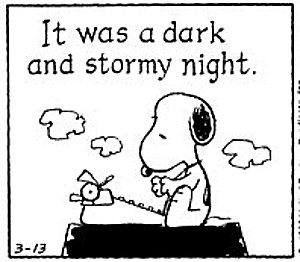
The Twins opening a season with a run of terrible play was certainly cliche for a team with four straight 90 loss seasons, the baseball equivalent of starting a novel with the line: "it was a dark and stormy night". But a cliche can have power if, instead of following the familiar pattern (team grows, learns and overcomes the odds to win), it inverts things (refusing to change, continuing to struggle, willingly accepting mediocre play to gain the ultimate rewards of change--either in personnel or in management). So, yes, the Twins played cliche ball in April, which means they've got us exactly where they want us.